Tuesday, May 27, 2008

Week One: Re-entry

My computer is still on Austrian time. I've been back in America for a week and settled in, but my computer's clock is just one example of how Austrian ways have affected my readjustment to American life.

CURRENCY: My first hit of reverse culture-shock was in the airport, just after going through customs. I had a long layover, so I purchased some food for dinner. It was bizarre to me to be using American bills again. After the colorful Euros that are distinctly different colors and different sizes for every increment, it seemed dull and confusing to be using only yellowy-green bills of the same sizes that looked very similar. Also, as I reached to pay, I found myself opening the change pouch and seeking a two-dollar coin; it took me a split second to realize again that there was no such coin, and I quickly handed over a five to avoid counting any more change. ^_^

TRANSPORTATION: It was nice to be in a car again, but strange. Besides the trip to Bad Aussee, I have not been in a car in five months. Though it's wonderful to have the convenience of a car again, after seeing the cost of gasoline, I'm really starting to miss Wien's reliable public transportation.

SHOPPING: I arrived home late on a Saturday night, and I have to admit, it was nice to have stores still open the following day. In Wien, everything is closed on Sundays--only the tourist spots and cafés remain open. This always required careful planning during the week to ensure that we had enough food to get through the weekend; last minute trips to the grocery store were not an option. (Speaking of grocery stores, I intend to continue to bring my tote with me. You have to pay for plastic bags in Österreich or bring your own, and this eco-friendly habit has stuck to me. It will be nice to be able to use a credit card to pay again... American cards were often only accepted in the touristy areas).

RESTAURANTS: Restaurants were another challenge. After five months, I have become used to walking in and seating myself, to ordering auf Deutsch ("Ich möchte..." oder "Ich hätte gern..."), to staying as long as I like, and to handing the server the full payment and telling her how much tip to include for herself ("Machen Sie das drei Euros" oder "Stimmt schon" if you don't need change). Suddenly it seems strange (and unwise?) to leave tips laying on the table; it seems rude how frequently servers approach and try to hurry customers along--encouragingly asking for orders, removing plates, asking if they want the check, etc. And yet I know it's not rude, merely different. Additionally, it is a relief that I can again ask for a doggie bag and take left overs home; in Austria such practice is considered very rude.

Also, I'm convinced that the food tastes different here. Not homemade food, but in restaurants. American restaurants now seem bland to me and boring, as if they're not real or missing flavor. I can't quite pin it. Maybe I became used to cooking my own food; when we did eat out, it was usually at a an Austrian heurigen or something similar, which basically solely serve delicious hausgemacht Essen. Homemade foods for that one location, not chains of restaurants with identical menus and ingredients processed and shipped across the country.

MISC: I miss having a big meal at lunch. I miss saying "Grüß Gott" constantly, esp when walking in to stores or checking out at the supermarket. But I love having a dryer again. I miss seeing dogs *everywhere* of all breeds and sizes at every time of day and all over the city. But most of all, I miss hearing Deutsch and other languages around me. English suddenly seems boring. I miss the challenge of daily life, when merely trying to buy vegetables at the Naschmarkt could be an ordeal. I became a pro at those basics. And strange as it sounds, I miss not being able to understand languages around me; I miss listening to the music and rhythm and picking out a few words and trying to understand. It was exciting, and just by looking around and listening--reading signs, watching screens, listening to music or people--I challenged myself to learn and gain more.

The next big adventure is coming soon enough: NYC in two weeks.

Stay tuned.

Friday, May 16, 2008

Once more from Österreich!

Well, that's about it then. The hours are winding down, and my last day in Wien is almost over. I leave diese schöne Stadt tomorrow morning to return to the States. This will be my last post from this side of the Atlantic, but I've enjoyed keeping this blog. I will continue updating in the States--there's plenty of partially drafted entries about Vienna that I just never had a chance to finish, plenty of observations I still want to share, and plenty of adventures lying in the months ahead. After all, I'm about to move to one of the largest cities in the world. New York City, here I come!


The past few days have been very surreal. I've said my goodbyes, I've been doing everything that I've wanted to do all semester, I've been stocking up on Viennese food/goods that I won't be able to find in the States, I've had my final fill of Melange and Kebab. But the finality of it all still hasn't quite hit home. I could go on living in this great apartment for ages, walking through the Naschmarkt each day, going to the Opera or Musikverein often, passing familiar sights that now remind me of this home. Reverse-culture shock is going to be fun, but I'll return one day.

Bis später, Wien. Danke für alles.

Tuesday, May 13, 2008

Cinnamon and Pork

Papers are finished, and 4/5 classes are complete. *breathes*

Last night I made dinner for my roommates using a bunch of ingredients that I had lying around needing used up. I adapted my meal from a recipe that Kat taught me. She usually cooks this using ground beef, but I had a package of pork "goulash" cuts (pork cut into small chunks, one of the least expensive meat options here) and substituted that.

Cinnamon Pork mix
Recipe from: Kat
Serving Size: 3-4 people

-1 package ground beef or small boneless cuts of pork (equivalent of "goulash" cuts)
-2 onions
-rice (approx 2 cups)
-raisins (I used two large handfuls)
-cinnamon, paprika, and chili powder
-cheese (mozzarella, parmesan, whatever you prefer)

First cook the onions in a large skillet and powder them with cinnamon. Cook until translucent and caramelized. (This is also a tasty snack in its own right, as my vegetarian friends quickly discovered). Meanwhile, start the rice. Kat's tasty trick: add a bouillon cube of chicken or veggie broth to the boiling water; the rice will absorb this flavor.
Remove onions and set aside. Add meat to pan until the meat is browned. While it cooks, powder it with *lots* of cinnamon, and also paprika and chili pepper to your liking.
Once cooked through, keep the meat in the pan and add the raisins. Stir around until raisins are puffy. Add all of the rice and onions back into the pan. Mix around, letting the juices coat the rice and form a tasty mixture. Remove from heat. Grate some cheese on top and mix in so that it melts slighty. Spoon out, and enjoy!


Additionally, Kat really likes cooking with cinnamon, and here's another favorite that's even easier:

Cinnamon Soy Pork
Recipe from: Kat
-1 package small pork cuts or other meat
-soy sauce
-cinnamon
Let the raw meat soak in soy sauce for an hour or so before cooking. Then add to a skillet (might need to add a little more soy sauce), powder with lots of cinnamon, and cook until browned and cooked through. Serve with rice. Delicious!

Friday, May 9, 2008

The U4 Incident

Swamped with papers, and two exams on Monday. We're in the final stretch.

This is the U-bahn I ride every day: "Alpengluehn" metro-gig


Also, as announced two days ago, Slovakia will officially adopt the euro on 1 Jan 2009. Use those korunas now!


More in a few days.

Wednesday, May 7, 2008

Theatre and Musik

I'm terribly cultured. Monday I went to see King Lear auf Deutsch at the Burgtheater. This was my third time seeing a production of King Lear, so I had no problem understanding what was going on, though I couldn't understand any of the German (it's translated into an archaic "Shakespearean" German, naturally). I was especially amused because the second scene opened with Edmund and Edgar bouting, with full gear. Not only was I happy to watch some fencing (albeit, stage fencing) but it seemed to make an appropriate metaphor for relationship between the two sons of Gloucester. Es tut mir Leid, I'm a bit of a Lit dork. ^_^

Last night I went to the MusikVerein one last time to see the Vienna Philharmonic perform Mahler's Third. This was my first time actually seeing the Philharmonic (though most of the members are also part of the Opera's orchestra). The Wiener Philharmoniker, considered one of the top three orchestras in the world, is immensely popular and thus it is very difficult to get tickets. I was lucky to get a Stehplatz ticket because I bought it well in advance.

Also, it's incredible how much I've learned about classical music since being here. Prior to coming abroad, I considered classical music enjoyable and knew the basics and the big names. However, after spending a semester in one of the world's centers of classical music and surrounded by very talented vocal and instrumental students, my initial ignorance is painfully clear. Since January, I have heard the names of countless famous composers, artists, and writers referenced constantly in classes. I have seen the graves of Beethoven, Schubert, Strauss, Brahms, Schönberg (all in the Zentralfriedhof), and Bach (in Leipzig). I didn't know who Mahler was when I first came to Wien. Now, I can't seem to get away from him. ^_^ His Symphony No. 3, with the sweepingly enormous size of the orchestra and the length of time and the grandeur of the movements, was quite a moving experience. Also, I received the surprise of also hearing the Vienna Boys' Choir the same night! (I had given up on seeing them in person long ago). The Boys' Choir, a women's choir, and an alto soloist performed the vocal accompaniment to the Mahler piece. Needless to say, the stage was very full. One of the best orchestras in the world + one of the best choirs in the world + an incredible orchestral piece = an excellent night and fittingly appropriate for my last concert in Wien.

Sunday, May 4, 2008

American foods?

Input or ideas appreciated!!! Thursday will be my last day at my teaching internship. As a final lesson, my teachers have asked me to teach the classes about American foods and bring in some examples. However, I'm having some trouble coming up with things that I can bring in. I have two classes of 13-year-olds, about 30 students each.

I will definitely be bringing:
-chocolate chip cookies
-banana bread
-peanut butter & jelly sandwiches (sliced into bite-sized pieces ^_^)

I planned to cook an American breakfast (pancakes, french toast, eggs, maybe bacon and hash browns, etc), but it will be hard for me to transport any hot items and make enough for so many students. Any other ideas???

EDIT: Thanks for all the suggestions and help. The kids absolutely loved the food, and they were really enthusiastic about learning the recipes. Definitely a success and a great last class!

Friday, May 2, 2008

Bad Aussee and the Salzkammergut

Yesterday was Der Erste Mai (May Day) as well as Austrian Labor Day... a national holiday! Classes were cancelled, and parades and festivities went on throughout the day. In the evening, we went to the Prater to half-priced rides and fireworks. (Unfortunately, the fireworks were lame because they only lasted 5 minutes ^_^). Today the fun continued, as this weekend is Stadt Fest Wien (the Vienna City Festival). There was music and tents (and balloons!) in Heldenplatz as well as performances and special events throughout the city.

But as promised, jumping back a few days to recount this past weekend:


Last weekend I visited Monika, my German teacher from the intensive period, who lives in the Salzkammergut region of Austria. This region is very scenic, full of snow-capped mountains, reflecting lakes, and small authentic towns. Monika was in Vienna for a conference, so she picked me up in the afternoon and we drove out to Bad Aussee (approx 4 hrs on the Autobahn). She simply requested an important stop along the way: the Lindt chocolate factory! :D The factory (in the middle-of-nowhere!) had a small shop selling very discounted delicious Lindt chocolate, and also had a tray of some free chocolates to sample. Mmmmm. I only bought a small box worth (about 8 bags of Easter candies for only 5€), but Monika bought two large boxes and a mixed bags... perfect for having on hand for classes and students. This was a delicious side-trip.

We arrived in Bad Aussee around 6pm, and as I walked through her front door, I was immediately greeted by her friendly Dalmatian Kiara and her two cats, Molly and Lily. I missed having close contact with animals, and I really enjoyed having pets for the weekend. Additionally, I wish I had taken a picture of the house. It was yellow and green, complete with typical Austrian woodwork and balcony. I had my own "holiday apartment" downstairs, with views down the street into the town and with the mountains beyond.

The next morning, Monika took me into town. I was impressed by how she seemed to know everyone--from the neighbors that drove by or were walking their dogs to the people that worked in the shops! First we stopped in a Dirndl shop where I was able to see some examples of the traditional Austrian garb. A dirndl consists of a bodice, white blouse, skirt, and apron, and most towns have developed traditional colors for their dirndl. For example, the Ausseer dirndl has a green bodice, a pink skirt, and a purple apron. These colors would be worn for young and old alike for traditional festivals.

A few blocks down, Monika was able to shop me the dirndl factory where they hand-print the fabric. It was very interesting to watch the woman work! She taped down a large square of the fabric on a flat worktable and used a long wooden block for a mold (dipped in paint) to press the pattern. I observed her making a plaid pattern (so just a plain block), but there were also carved blocks on the side that would create patterns such as small flowers or stags.

Next, we stopped in a gingerbread shop! Gingerbread is another traditional food of Bad Aussee. I bought a little bit to sample, and I can't wait to try it! :) From there, we walked through the town and she told me some more about its history. Bad Aussee is a spa town located on the point where two rivers from the Alps merge into one. It is famous because of the real-life Cinderella story of Archduke Johann and Anna Plochl. Anna was the daughter of the postmaster of Aussee. Johann, the brother of the emperor, met Anna and fell in love with her, ignoring social customs to marry the girl from the lower class. Ausseers are very fond of this story, and have a statue devoted to Archduke Johann because of everything he did for the region.


After exploring Bad Aussee, Monika drove me to Hallstatt. Hallstatt is the oldest town in Austria and one of the oldest in Europe-- it is 7000 years old!!!!!!! Its name has even been applied to a period of the Iron Age. Its Salt Mines also have some interesting more recent history as a treasure trove of the Nazis. Its beauty (argued to be the most beautiful town in Austria as well as the oldest) earned it a spot as a UNESCO World Heritage Site. It is located very scenically on the edge of a lake and framed by the Alps. Here is a view across the lake from Hallstatt:
Hallstatt lake

There are extensive salt mines in the mountains nearby; for centuries, the men worked in the mines, while the women loaded heavy piles of salt upon their backs and trekked for miles to transport the salt. Numerous monuments throughout Hallstatt honor these women, who had to continue their work even when they were 9-months pregnant. Many children were lost because of this hard life style. Today, however, Hallstatt flourishes instead from tourism rather than salt and the Salt Women are a thing of the past.

Another interesting part of the town was the ossuary at the Catholic Church. I have never seen anything like this before! Because the town is so old and there is so little space (the houses are almost one on top of another!), the church had little space for a cemetery. They would use their limited plots for temporary graves after a person died; however, after a while, their bones would be dug up from the grave and the space would be re-used. The bones were marked with the name and dates, decorated, and put on display in the ossuary. This is a picture from inside:
Hallstatt cemetery

After Hallstatt, Monika drove me through a variety of other towns, including the more spaced-out Gosau (so many green fields), and scenic views of Dachstein and other major Alpine peaks. The views were stunning.

Sunday I left in the morning to return to Wien. (See the previous entry for notes about the wonders of the Austrian breakfast I was served each morning!). Overall, it was a wonderfully relaxing weekend, and just the right medicine I needed for the end of the semester. I really hope to come back to the Salzkammergut one day though, hopefully to spend more time and hike between the various town, and who knows? Maybe if my German is good enough, I will follow in Monika's footsteps and retire in a wonderful town like Bad Aussee.

Tuesday, April 29, 2008

Austrian breakfast

As a short break and a writing warm-up before diving in to a paper-writing marathon this afternoon, I bring you a brief cultural update. Today's topic: the typical Austrian breakfast.

Frühstück is of course a very important meal in Austria. (Lunch or the mid-day meal is traditionally the "big" meal of the day, but breakfast is important to start the day off right). While on my own in the apartment, I usually compromise the traditional breakfast and instead grab a quick croissant (often with apricot or chocolate filling!) or enjoy a bowl of Müsli. Almost all of the American-style cereals that are available in stores are very sugary or full of chocolate, so I prefer to avoid those. Müsli is similar to granola, but more loose and usually unbaked. (Heidi at 101 Cookbooks provides a Muesli recipe that sounds delicious as usual).

More traditional breakfast foods include: cold cuts (ham, salami, etc), slices of cheese, various types of bread, butter and jam, soft boiled eggs (always in an egg cup), coffee or tea, juice, etc. If cold cuts are not available, certain types of wurst or sausage might be offered. Yogurt and fruit are also often provided. Besides müsli, cereal is uncommon. American breakfast foods such as French toast and pancakes are basically unheard of (Austrian pancakes, or palatschinken, are essentially crepes). However, let me stress again, bread is very important. Bread and rolls are the crucial element to the Austrian breakfast.

For example, this weekend in Styria I was given a traditional breakfast. As a guest, an array of the following was laid out for me each morning:

  • Tea: a huge pot greeted me each morning, and I filled three cups to finish it
  • Juice: often orange multivitamin
  • Soft boiled eggs: I learned to crack and peel off the shells in order to scoop out the inside; thus, the egg cup is essential
  • Bread: this is the bulk of an Austrian breakfast. The vast selection commonly includes the round Semmel roll, the Kipferl (shaped like a croissant), and a square-shaped multigrain roll (name unknown). Slices of bread are also often multigrain or a darker grain... none of this white bread that Americans are used to! Each morning, I ate at least four slices/rolls/pieces, which I spread with...
  • Jams and Spreads: Butter and three types of homemade jams were offered--an apple-and-something, a berry-peach, and a blood orange-apricot. The flavors were incredible. My hostess offered Nutella and cream cheese, but I would choose the homemade delicacies over a manufactured brand any day.


Then again, apart from this extensive list, there's always another type of "traditional" breakfast: a visit to a Viennese coffee house.


An Austrian photographer pictures a typical breadbasket with some common breads I enjoyed as part of a traditional breakfast. The Semmel roll is pictured in the front.

Now that I have sufficiently made myself hungry, I must return to my paper. Bis Später!

Sunday, April 27, 2008

City Bike Rentals

Bicycle-Sharing Program to Be First of Kind in U.S.
I'm glad that such programs are finally coming to the US. However, I may be spoiled, but a $40 annual fee does still sound a bit expensive to this poor college student, especially when comparing it to the existing program in Vienna. The article should perhaps consider Vienna's CityBike program in addition to others in Europe that are very similar.

With CityBike, you simply register and pay a one time fee of 1 euro. That's right, only one euro. After joining, bike rentals for an hour are completely free. The only cost is for additional hours (1€ for the second hour, 2€ for the third hour, etc). However, you are encouraged to return the bike to a station (conveniently located at almost every U-bahn stop) after the first hour for a brief break of 15 minutes; after that you can check it out again for another free hour. Additionally, these bikes are intended for public transportation, so hopefully you'd be able to make it to your destination within an hour. They all have large baskets on the front that are very convenient for bags or other belongings. Sponsors help cover the costs and advertise on the bikes, but the city also advertises for the program itself and maintains a hotline for problems or difficulties. Sure, the bikes are not the highest quality, but they are free--not even an annual $40 fee required! American cities should take notes. ^_^


Just returned from an amazing relaxing weekend in Styria,"The Green Heart of Austria". Unfortunately, a pile of papers and Hausaufgaben await, so that update will have to wait for a study break.

Also, a special shout out to my sister and all of BE Kairos XXV, from this member of XV (my tenth anniversary, or something ^_^). Live the Fourth, and welcome home! :)

Tuesday, April 22, 2008

So much to do!

Things are wrapping up too quickly here. Last week we passed the final month mark, and now everything seems to be gathering speed for a final sprint.

My first paper (of four) is due next week. I've been frequenting the university library in order to do research. My time in that library has been very healthy and definitely put me back in an academic mindset. I'll need it to get all these papers done. In fact, I really should be at the library now, but I gave myself a break and made banana nutella crepes instead. Yum.

Time to get crunching and back to work. Apologies if I'm not so prompt in updating this over the next few weeks. I'll be back soon enough.

Tonight I'm going to the Musikverin for a Bach performance; should be excellent as always.


Tschüss ba ba! and love from Wien.

Thursday, April 17, 2008

Topfenecken

I'm on a roll!  Today I baked some delicious Topfenecken ("Topfen wedges").  This dessert snack is delicious and easy to make! Topfen is a cheese that is a common ingredient in Austrian desserts (Topfen cake is pretty much Austrian cheesecake, and Topfenstrudel is one of the most popular strudels, only after Apfel). Unfortunately, Topfen is pretty much impossible to find in the States, so this recipe will probably be most applicable to my study abroad classmates or anyone else living in Central Europe. Therefore, I will keep all of the measurements metric. For the American readers, I will try to find a reasonable substitute when I get back to the States.

Topfenecken
Recipe from: Heidi, my teaching internship advisor
Ingredients: 250g Flour, 250g Butter, 250g Topfen (20%), salt, marmalade (apricot is best)

Mix the flour and a dash of salt; cut in the butter in small pieces and mix with a fork in order to make the dough flaky. Add the topfen. Mix until soft dough forms. Roll into a ball and chill overnight, or for at least 4 hours.

The next day, roll out the dough (not paper-thin but with only a few millimeters of thickness). Use a knife to cut the dough into squares. Put a small dab of marmalade in the middle of each square. Then pull one corner of the square up and over to the diagonal side, forming a triangular pouch. Pinch the sides closed and place on a baking pan (no grease needing).

Bake until puffed up and golden brown (approx 200 C for 15 minutes, or 350 F for 10 minutes?). Remove and Bon Appetit!

Photobucket

A substitute of gluten-free flour will also make deliciously flaky gluten-free Topfenecken. The gluten-free versions are a little flatter, but still puffy and flaky--apparently characteristics that are hard to find in gluten-free foods. The Topfen works wonders. Köstlich!

Wednesday, April 16, 2008

A Taste of Home: Chicken Pot Pie

With a craving for food that reminded me of home and with a bunch of frozen vegetables needing used, my project this week was to make Chicken Pot Pie.  Everyone seems to like to make things from scratch in Austria (it's impossible to find frosting, pre-made pie crusts, etc in stores. Not even Bisquick!), so I set out to make it all on my own.  Special thanks to Kristi and Mom for giving me tips!

For the crust, I followed this recipe, tweaked a bit for bigger proportions to make a larger crust. Put flour and a pinch of salt in a bowl and cut in thin pieces of butter; use a fork to mix and cut the butter into smaller pieces. Once the butter is broken down and the mixture looks crumbly and even, add a few spoonfuls of ice water. Mix together, and work the dough into a ball with your hands. Wrap in plastic to keep it from drying out, and refrigerate for 4 hours or overnight.


For the filling, I referenced this recipe but pretty much did my own thing based on what I had. I used five small boneless chicken filets, 3/4 of a large bag of frozen veggies, a couple potatoes, condensed cream of mushroom soup, and milk.  These were all items that I had lying around the house that needed used up.  Very convenient!  Add anything else that you have on hand that would be tasty inside.

Prepare: Preheat over to 425 F (or 218 C!). Chop the chicken filets into smaller pieces (bite-sized chunks). Thaw the frozen vegetables or chop/prepare a mixture of fresh vegetables (corn, peas, carrots, etc). Peel and chop as many potatoes as you'd like (I only used two small ones--they're all I had--but we decided more would have been better. Also, consider briefly boiling the peeled potatoes before adding them to the vegetable mix; this will make them softer).

First, melt a spoonful of butter in a skillet (make sure it's a big skillet!). Add the chunks of chicken to the pan and sprinkle them with salt and pepper. Keep turning them over and moving them around until all the chicken is cooked through. Next, add your vegetables, chopped potatoes, soup (condensed cream of mushroom or chicken), and milk. Mix together for about 5 minutes or until the entire mixture is hot (slightly bubbling).


Remove your chilled dough from the fridge and roll it out. Do not be alarmed if it's especially hard; the butter has probably solidified together again. Let sit for a minute and slowly use your rolling pin (or other cylindrical object, such as the glass that I used ^_^) to stretch it out and roll it into a thin long shape in order to cover your baking pan. Try to keep the thickness consistent; paper-thin dough will form a crispier crust, whereas slightly thicker dough will take longer to bake but form a softer, doughier crust (and in my opinion, tastier!).

The linked recipe calls for baking your pot pie in the same skillet; instead, I decided to use a 9x13 pan (thus needing a larger crust). Pour your filling mixture into whichever pan you'd prefer to bake in. Lay the dough on top so that it completely covers the mixture; wrap the ends around the edge of the pan and pinch. Use a knife to poke slits in the dough crust; this will allow steam to escape. Melt another spoonful of butter and brush thinly onto the crust.

Put into the over and cook for about 12-15 minutes or until golden brown (varies depending on your thickness of crust). Remove, serve, and enjoy!

Tuesday, April 15, 2008

Dearly Beloved

Let us pause for a moment to mourn the dollar.


Financially, it has been a rough semester to be abroad in Europe. The last time I traveled (and even until this past summer), the exchange rate never went above 1.33 USD for 1 Euro. When we arrived in Vienna in early January 2008, it had risen to about 1.40 USD per euro. In those short three months since then, the strength of the dollar has fallen dramatically.

The exchange rate is currently at 1.59 dollars per euro. Due to hit 1.60 any day now.

From a student’s perspective, living in a city that relies on cash rather than plastic, this thirty cent change makes a drastic difference. Items remain priced pretty much consistently (0,49 cents for the cheapest small loaf of bread, 1,19 for a liter of milk, 1,90 for a basic cup of coffee, etc). But now multiply that amount by 1.59. That's how much it costs in USD. And don't get me started on the cost of meat. A six-pack of chicken filets can cost nearly 14€-- that's more than $22 for chicken!!! Luckily, I have learned to shop around carefully and get better deals and eat a lot of pork (the most inexpensive meat here because it is most easily available). This is especially painful when considering the cost of traveling--even prices that might seem cheap in Euros actually end up very expensive in dollars. *sigh*

The pound/dollar exchange rate remains one of the worst (2.01 USD for 1 GBP) but at least this rate is constant. The Euro is appreciating as the dollar is quickly depreciating, and Americans in Europe are left in the middle, scrambling for spare change. With no end in sight.

Austrian Recipe: Wiener Schnitzel

Time for something new to spice up this blog! This semester, I've collected quite a few recipes, most of which are for authentic Austrian cuisine. Rather than just selfishly keeping them all to myself, I've decided to post them for the world to share.  Enjoy!

Naturally, the first recipe is for one of the most quintessential examples of Viennese cuisine, which is also one of the easiest to prepare: 

Wiener Schnitzel

Materials: salt, flour, egg, breadcrumbs, thin cuts of meat (i.e. pork or turkey; in Austria, a schnitzel merely means a thin cut of meat)**
The amount of egg, flour, and breadcrumbs depends on how many pieces of schnitzel you are making. I usually make about 4 small pieces and have no problem using only one egg.

1. Salt the uncooked meat on both sides. Use a meat tenderizer (wooden hammer-like object) to make the schnitzel even thinner. This will ensure that the meat is cooked through (otherwise the breading might brown faster than the meat cooks).

2. Get three flat bowls and place the flour, egg, and breadcrumbs each in a separate bowl. Put each piece of meat first in the flour. Turn it over until it is coated in flour. Next place it in the egg, and also ensure that it is coated. Finally, put each piece of schnitzel in the breadcrumbs. This is the outer layer. Keep turning it over and ensure that the meat is completely covered in breadcrumbs.

3. Warm oil (or butter) in a skillet on the stove. Once warm, place the coated meat in the skillet. Keep turning the meat over every few minutes until it is golden-brown color.

4. Remove schnitzel from the pan and place on a paper towel. Pat off the excess oil.

5. Season to your taste; lemon is especially good. Consider serving with sauteed potatoes. Enjoy, and tell me how you liked it!


**Traditionally, Wiener Schnitzel is veal, but nowadays most Austrians prefer to use another meat for reasons of cost and ethics. Pork is the most common schnitzel found in restaurants, followed closely by turkey or chicken.

Tuesday, April 8, 2008

Artist and Environmentalist

Hundertwasser is Artist of the Month on AllPosters.com! Hundertwasser is one of my favorite architects, whom I have really come to love since arriving in Vienna and seeing several of his major works around me. He is famous for his unusual colorful buildings with odd angles that avoid straight lines; additionally, all of his buildings incorporate nature in some way, such as having trees growing out of the building or grass covering the roof.  Plus, this Kiwi-lover was delighted to find out that he chose to live in New Zealand most of his life, considering it his official home.

Here's one view of the famous Hundertwasserhaus in Wien, a low-income apartment complex:

Monday, April 7, 2008

Poland and back

Last week was allotted solely for midterms, so we were pleasantly surprised when informed that all of our midterms would be complete by Wednesday afternoon, and we would have a four-day weekend. Therefore, my roommates and I took advantage of this time to travel to Poland! (Which, happily for me, was the first country I have traveled to this semester that is not on the Euro. For once, everything seemed affordable because the złoty to dollar exchange rate worked in our favor).

We left late Wednesday night via night train and arrived in Krakow at 6am Thursday. Though the accommodations were nicer than my night train to Venice (this was a true Schlafwagen with full beds, closet, and all), I slept less partially because of the hour of our arrival. Stumbled off the train with bleary eyes and found our way to our hostel. [On a side note, all the hostels in Krakow seem to have silly names—Hostel Hocus Pocus, Tutti Frutti hostel, Hostel Goodbye Lenin, etc. ^_^]

We explored the city for most of Thursday and Friday exploring the city. Krakow is one of the oldest cities of Poland and has a rich cultural history. When the country was partitioned (17th century—1919), Krakow was a part of the Austrian empire and a northern cultural center. We stayed near the Old City, only a short walk from the Main Market Square. This Marketplace is one of the largest squares in Europe. In the center of the square is the old Cloth Hall, which is now used as a marketplace with endless stalls selling Polish wares. Some noted items were hand-painted plates, chessboards, children's toys, and beautiful amber jewelry everywhere. Also on this square was a tall clock tower, from which the Hejnal Mariacki (Trumpet Signal) is played every hour on the hour. The "Taps"-like trumpet melody ends abruptly each time, keeping with the tradition to cut it short in memory of a trumpeter who was killed in battle in 1241.

After a bit of shopping, we went to Wawel Hill and climbed up to the castle. The Wawel sits on the Vistula River, overlooking the city. It was built in the 16th century and much of the structure seems to include a hodgepodge of different architectural styles, lacking symmetry. Or that was my impression. Still, I liked it a lot and would recommend a visit. We wandered around the elegant courtyards but did not enter the buildings due to the price. After climbing the winding path back down, we walked along the river and sat by the statue of the dragon. This statue marks where the legendary dragon of Krakow once lived in a cave below the castle. Every few minutes, it would surprise visitors by igniting and exhaling a burst of flame.

The other main portion of Krakow is the Jewish Quarter (or Kazimierz). This Quarter was originally a separate town that merged with the Old City. During Nazi occupation, the Quarter was emptied of its inhabitants who were all sent to the Ghettos and concentration camps. From a town that once had hundreds of thousands of Jewish residents, only in the past 10 years have Jewish Poles slowly returned to the Jewish Quarter of Krakow. We wandered past countless synagogues, and entered one of the older synagogues and the old Jewish cemetery.

Additionally, we went to the Czartoryski Museum (Krakow's art museum housing a Da Vinci and Rembrandt) and a Poster Art Gallery with an extensive collection... unfortunately, when we returned to buy something, the shop was strangely closed, locked, and dark, though the posted hours claimed that it should be open. Generally, our lesson learned from Poland was that when an opportunity arises, one should jump on it and take advantage immediately rather than hoping for a second chance. ^_^

The meals in Krakow were incredible. I ate pierogies and kielbasa to my heart's content. There were also a surprising number of Georgian restaurants, a cuisine which we enjoyed our first night. I did not get the chance to try the dessert pierogies (and if I knew a little Polish, it would have been nice to guess what some of the other non-traditional fillings there were, beyond potatoes/cheese or sauerkraut) but I loved the bakeries that seemed to be everywhere. On our last night, I used my final złotych to buy a huge collection of different cookies and pastries... and in the end, it only worked out to be about $5. mmmmm delicious!

Saturday was a more somber time; we spent the day at Auschwitz - Birkenau. It's still hard to process it all. Auschwitz (I) has been turned into a museum, which many of the old barracks converted into exhibits to memorialize and remember all the terrible crimes that happened in that place. 3 km down the road, the more extensive Birkenau is more of an outdoor experience. Many of the buildings of this larger concentration camp (the "death camp") were ruins. The old railroad tracks are still in tack, which transported millions of Jews, Poles, gypsies, homosexuals, and other prisoners directly into the heart of Birkenau. After getting off the train, they trekked only a short distance down the road to where they were told they would be given cleansing showers--the gas chambers and crematoriums. There were at least five of these buildings, one of which was destroyed and burned in 1944 by an uprising of the prisoners working there. When Nazi Germany fell in 1945, the Nazis quickly dynamited the remaining crematoriums in order to destroy the evidence. The ruins remain as they were left, as a lasting memorial to the millions that died there. It was terribly eerie to be walking on the same path that they walked, to be standing in the grounds around the crematoriums where their ashes may be mixed with the earth, and to be able to turn and leave, walking away externally completely unscathed, but internally shaken.

It was hard, but I'm glad that I was able to go. I'm glad that I was able to be with other people for this experience.


Krakow was a beautiful city, and Poland was an incredible country. I would seriously consider coming back here for an extended period.

Sunday, April 6, 2008

Spring Break: Italia!

Tonight I'm trying to catch up on a bunch of posts at once. First and foremost-- my excellent spring break in Italy!

We caught a night train from Vienna to Venice and arrived in the city of canals around 8am, surprisingly well-rested. After dropping the bags at our hostel, we set out to explore. Venice is rather small and one can easily walk everywhere--no need to pay any hefty prices for a touristy gondola ride or get a public transportation ticket for a boat-bus. Venice's main street stays roughly near the Grand Canal and forms a full circle that incorporates all the major sites. We visited the Basilica of San Marco, the Arsenal, the Rialto bridge, and many other churches. Along the way, we passed hundreds of shops full of beautiful glass jewelry and masks. I had heard negative things about Venice and how touristy it has become, but I really enjoyed my brief stay in the city; it probably also helped that I was traveling with two other girls and we had a blast exploring all the unique little shops.

On Sunday we went to Palm Sunday mass in Venice, and watched a procession of palms outside a church for a later service. Then it was time to bid farewell to the sinking city and catch a train to La Spezia... from the eastern Italian coast to the western. After changing trains, we passed Florence and Pisa and arrived in La Spezia in the evening-- we had made it to the gateway of the Cinque Terre! Rather exhausted, we caught a regional train to the second town (Manarola) in which our hostel was located. Unfortunately, the train station was through a tunnel at the bottom of the mountainside. Rolling our luggage behind us, we stumbled up the steep winding streets of Manarola to where our hostel was perched high above. Our ravenous stomaches reminded us that we had never eaten dinner, so after checking in we trekked into the town and found an excellent seafood place for dinner (mmm stuffed muscles). The Cinque Terre, being located right on the coast, provided some of the best seafood that I have had in all of Europe.

We spent all of Monday outside, savoring the fresh air and the incredible views in the Cinque Terre. The Five Towns are (from north to south) Monterosso, Vernazza, Corniglia, Manarola, and Riomaggiore. We started by hiking the easy and scenic "Via dell' Amore" (Lovers' trail) from Manarola to Riomaggiore. Riomaggiore is the main town of the Cinque Terre; like all the towns, its main source of food is first the sea and secondly the vineyards. (Note that the sea in that picture does not do justice to the beauty of the ocean; see later shots). From this southernmost town we took the train north to Vernazza. We spent a good portion of time in Vernazza--eating lunch beside the crashing waves, walking around the town, and hiking up the mountain to a sanctuary and cemetery with a spectacular view.

From there, we caught the train up to Monterosso, but due to the time we didn't walk up to the main town (it is supposedly more built-up with hotels and restaurants). Instead, we stayed on the beach, one of the few sand beaches in the Cinque Terre. Anastasia, who is from the Midwest and hadn't been on a beach in the past 10 years, especially loved it. Caught the train to Corniglia and enjoyed this final town of the Five Lands. From Corniglia, we hiked back to Manarola, catching a great view (like a postcard!) from the path of our starting point perched on the cliff by the sea. We had dinner in another lovely seafood restaurant, right on the edge of town and overlooking the sea, sipping wine and enjoying muscles, crab, and pasta as the sun sunk low in the sky. But we couldn't stay for the full sunset. We hurried back to the hostel and gathered our bags, and from the Manarola platform waiting for the train to La Spezia, we watched the sun sink below the watery horizon. It was perfect.

I absolutely loved the Cinque Terre. One last favorite picture before moving on:


Florence was next. From Tuesday until Wednesday night, we explored the city of Dante, Michelangelo, Machiavelli, Galileo, and countless others. In fact, we saw the tomb of those latter three names (plus a Cenotaph to Dante, as the exile never returned to Florence) in the Church of Santa Croce. This church also had frescos by Donatello. Also went inside the Florence Duomo, which has this famous painting of Dante and his Comedy. Needless to say, this fan of Dante was loving every moment of being in a city where everything from the streets to the restaurants were named after the famous poet. (And yet Dante actually spends most of the Comedy bashing his home city of Florence). We explored many of the famous piazas, saw the fake David (not wanting to pay or wait in line for the real one), and walked Ponte Vecchio. Wednesday morning we woke up at dawn in order to get in line for the Uffizi gallery. This extensive art museum, which houses the treasures of the Medicci family, is one of the greatest art collections in the world: Botticelli, Michelangelo, Da Vinci, Raphael, Rubens, Rembrant, and more. As an individual who has rarely had the opportunity to see the great masters before this semester, this was a truly incredible experience.

To celebrate our final hours in Firenze, we kept up our tradition of "A Gelato, A Day" by going to a 70 flavor gelateria. I had a lot of gelato in Italy, but this was my favorite place. We enjoyed incredible flavors such as rose, grapefruit, chocolate mousse, papaya, kiwi, blackberry, and a mixed melon flavor which was my favorite of the day... not to mention all the crazy flavors that I'm not even sure what they were! ^_^


Onward to ROMA! We were in Rome for Easter, which was overwhelming but also a once-in-a-lifetime experience. We were able to secure tickets to all of the papal masses and thus celebrated mass with the pope four days in a row. Crazy! The crowds for these masses were unbelievable... though tickets are required to attend, more tickets are printed than people could possibly fit inside the building, so you need to get there at least two hours ahead of time. On Holy Thursday, we learned what an "Italian line" is. Basically, there is no line, just a lot of people pushing forward in a solid herd. We were very lucky to get inside and get seats for every mass.

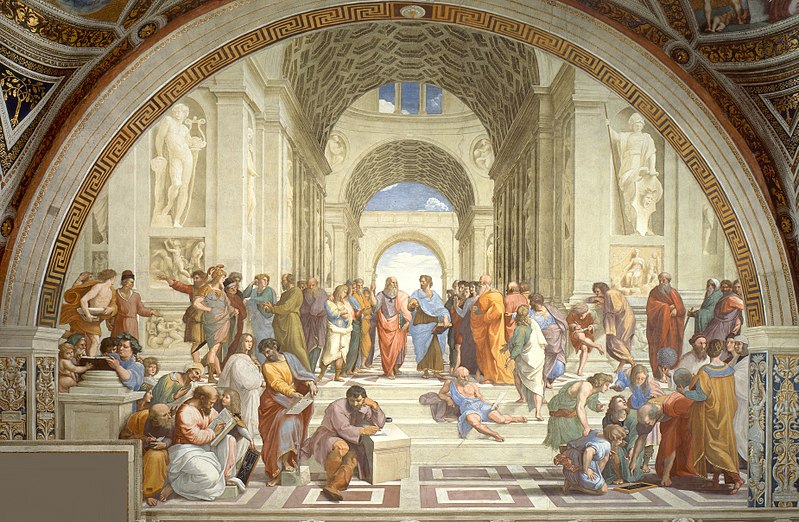
Thursday we explored the city, highlighted by the visit to the Pantheon, which is now a Christian basilica and houses the tomb of Raphael. Friday we woke up very early once more in order to go to the Vatican museum. We arrived before it opened, but still stood in line for 1.5 hours until we got in the doors. We took our time once inside, savoring the treasures of sculptures, maps, paintings, and artifacts. We saw the Rooms of Raphael, which include the School of Athens (not my picture) and on other walls, paintings that include Dante ^_^. The collection was incredible! The crowning highlight came at the end of the museum--the Sistine Chapel.

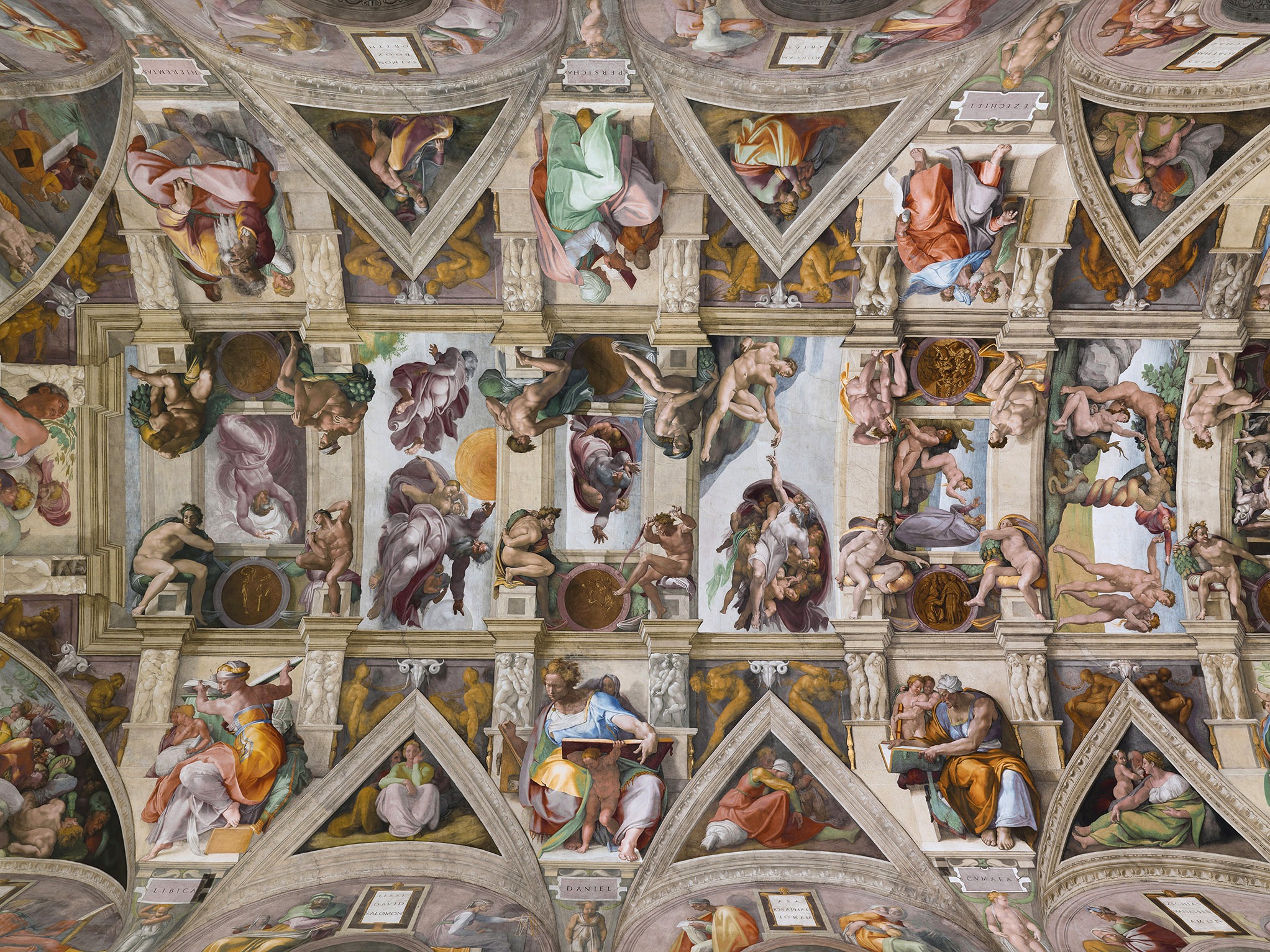
I can't say how long we spent in that one room. I had always pictured a small-ish, round chapel, with the painting of God and Adam focused in the center, but it was far and beyond my expectations. No pictures of it really do the room justice; indeed pictures are not allowed in the room so these are not mine. There is incredible artwork on every wall, in every nook, to the point that there is too much to see. Michelangelo painted the ceiling, which traces creation through the Fall of Man/the Flood. The walls are covered by Biblical scenes by the masters, Botticelli among them, with scenes from Moses' life on one side and Jesus' life on the other. Behind the altar is another of Michelangelo's masterpieces: The Last Judgement.

Saturday we went to the Catacombs south of the city. Portions of Catacombs, or labyrinthine tunnels that served as safe havens and burial places of the early Christians, continue to be discovered in areas around Rome. We were able to descend into these old passageways and walk in the old cemetery or "sleeping place". There were thousands of shelves and the pieces of plaster or marble on the walls that used to cover the front of the shelf. These plaster slabs from the early centuries AD were decorated with Christian scenes and symbols that are clearly distinguishable to any Christian today. It was spiritually moving to see, for the first time, and ancient site that used not only a language that I could (sort-of / pretend to) understand but also a religion that I was intimately familiar with. This was not hieroglyphs or cuneiform, but something that connected closer to me and my own life experience.

We spent the rest of the afternoon at the Roman ruins, exploring the grounds of the old Forum and Augustus' House. We ended up going to the Colosseum Sunday afternoon instead. It was very impressive just how much of this ancient civilization is still in excellent condition!

Sunday we attended our last papal Easter service--Easter Sunday mass in St. Peter's Square. It was amazing to see so many thousands of people gathered into one place for a mass, including more of the religious (priests, nuns, etc) than I have ever seen. In addition, the enthusiasm of this multicultural crowd was incredible. A group of young Latino girls near me shouted a song-like chant with claps and waving their flag to "Viva le Papa!" Hundreds of flags waved throughout the square, despite the pouring rain (everyone was completely soaked by the end, but we stuck through). It was a collection of patriotism and internationalism and mixed backgrounds, but all gathered for one purpose. In the end of the service, Pope Benedict read a final blessing which included wishes for a "Buona Pasqua" or "Happy Easter" echoed in more than 70 languages. Even though we couldn't communicate with most of the people we were seated beside, it still felt united and connected.

Monday we caught an early train from Rome to Milan. We explored the famous city of fashion for a few hours, though most places were closed for the national holiday of Easter Monday. Left in the early afternoon to catch our plane back to Vienna and return to classes the next day.

It was a whirlwind trip, but I fell in love with Italy. In one trip, I saw major works by all of the ninja turtles, including the tombs of two of them. I tasted genuine gelato every day, and now there's no going back. I saw scenic views and incredible buildings, and tasted delicious dishes. It was almost too much for just a week and a half, and I look forward to the opportunity to return.

Thursday, March 13, 2008

Hitler and Vienna

Today, or I suppose yesterday, was the 70th anniversary of the Anschluss. On this date, seventy years ago, Hitler and his Nazis marched into the streets of Vienna to be greeted with cheers and crowds of supporters. That evening, Hitler came to Heldenplatz (or "Heroes' Square), which is directly below the new wing of the Hofburg palace, the former winter residence of the Habsburg monarchy. He entered the palace, and climbed to the grand balcony of this Neueburg; from the balcony he spoke out across the square to the masses that had gathered in support. Hitler, who was born an Austrian but left Vienna after rejection from art school**, was welcomed back to the city as a hero. Following this event, Parliament was dissolved, the country was absorbed into Germany at last; Austria disappeared from the map for the next seven years and the world fell in to another more terrible World War.

**Adolf Hitler was born in Austria, not far from Linz. He came to Vienna to study art, but after he was rejected from the Art School multiple times, he moved to Germany. I have recently learned that his old apartment is only about a mile from where I live. He used to frequent a coffee shop, the Cafe Sperl, that is a short walk from my apartment and which I have visited multiple times. How eerie and disturbing!

Last night, on the evening of March 12, 2008, the Volksgarten and lawns of the Heldenplatz were covered in 80,000 candles as a memorial to the events of March 12, 1938. Last night there were masses gathered once more in Heldenplatz; but these were not crowds that were riled up by the words of one terrible man, but somber crowds that walked between the groups of candles, quietly remembering and reflecting on a past singed with guilt and so many lost lives. 80,000 candles were prepared for the memorial, one candle to signify each lost Austrian life. The people of Vienna took the candles at dusk and arranged them into meaningful patterns across Heldenplatz and the Volksgarten, creating a garden of light. Some common symbols were the Star of David and the peace sign.

Events continued through the day to mark the anniversary of the Anschluss. On Mariahilfestraße (a popular shopping street), I saw a woman dressed as Hitler, using a megaphone and a grave voice to call upon everyday shoppers to take a moment to remember and never forget the past. Various exhibits are on display at the museums, and the Opera will do a special study of how the building was used during Nazi occupation. Though an anschluss and merging with Germany was welcomed and praised at the time (since the end of World War I, the Austrians had longed to join Germany and return to some semblance of an empire), hindsight is 20/20. March 12, 1938, was a very grave day indeed in Austrian history.

To close, here is a picture of the candles of Heldenplatz. I am sitting beside one of the Stars of David:


I leave for Italy tomorrow and will not have internet access. Have a blessed Easter and a relaxing spring break! Tschüssbaibai!

Sunday, March 9, 2008

Schönes Wochenende

As of today, I am only five hours ahead of EST, instead of six! How exciting! ^_^ Austria will go on Daylight Savings in a few weeks.

Stayed in Wien this weekend, but it was packed and excellent. I'm regretting that there's so few weekends left that I will probably still be in Vienna; there's still so much to see here! May have to rethink some of this.

The weather was beautiful on Friday, so shortly after classes we caught the U-bahn and a bus to a corner of the city near the Wiener Wald (the Vienna Woods, the "green lungs" that surround the city). We were looking for an obscure church, which served as a good excuse to be outdoors and explore a new area. We found this cubical church, and it was very cool... and then explored the trails behind it. We found an enormous sundial/astronomical clock and resolved to return at sunset some time when the sky was clearer. We hiked through the woods for a while and subsequently got lost, of course. I'm exciting to return in a few weeks though, when everything will be in bloom.

This weekend was a weekend of fleemarkets. I practiced my haggling at the bustling Naschmarkt flohmarkt (the indecisive walk-away technique works wonders!), and afterwards went to an antiques / book sale / easter market that I had seen advertised on a banner. I explored some of the grounds of Schönbrunn (can't wait till they're in bloom too), had AMAZING gelato, and enjoyed the Albertina for free (for Sunday only, this art museum opened its doors to everyone for no cost, to celebrate the anniversary of their renovations). I saw works by Monet, Picasso, Rothko, and more. Two of the most striking were Monet's "Vue de Vetheuil" and Chagall's "Sleeping Woman and Flowers". [Apparently these works are a little more obscure, because I'm having trouble finding links online (the lack of the Monet is especially surprising!).] Today I learned to bake Apfelstrudel and schnitzel. Not hard at all and most of the ingredients are internationally available, so hopefully I'll be able to replicate this in the US. I also now am in the proud possession of an entire strudel that I made. This could be dangerous. ^_^

Classes tomorrow, and I leave for spring break in less than a week. Italia, here I come!


P.S. Mineral water ("mit" carbonation) is growing on me. I can handle it if I swallow it in gulps and ignore the salty aftertaste. I still need to wash down the carbonated water with still tap water though. ^_^

Monday, March 3, 2008

Ljubljana

Things have been very busy the past few weeks, what with planning spring break, figuring out summer jobs, and working through classes. I'm afraid that this blog has been terribly neglected, but I'm determined to change that.

This past weekend I traveled to Slovenia with some of my roommates. I was very amused by the strange looks some people gave me when I told them that I was traveling to Ljubljana (pronounced: Loob-ya-na) for my first international weekend excursion. But this little country deserves more credit, and I heartily enjoyed myself!

We caught the train from Wien to Ljubljana (via Viellach) Friday afternoon, and arrived around 8pm. Our hostel was a great place only a short walk from the train station, and it was more like an apartment than a traditional hostel. Also, our room was entirely bright green and orange. ^_^ After checking in, we were all naturally starving. Besides a box of cookies that we devoured on the train, we hadn't eaten since before noon. After checking out some recommended places, we settled on a pizza place near the center of town. Here they offered more than 50 types of speciality pizzas. As I was in the Balkans, I decided to go for a truffle pizza and try truffles for the first time. Not bad!

Saturday was occupied by our great excursion to Postojnska jama, or the caves of Postojna. Slovenia is full of huge cave systems (some of the longest in Europe) and this was just one. They. were. incredible! I wish my pictures better captured the awe and beauty of the place. The caverns are so vast that they often hold weddings, performances by opera singers (can you imagine the echo!), and even the circus! Stalagmites, stalactites, curtains, and columns galore. Mother Nature certainly knows how to sculpt magnificent art.

When we returned to Ljubljana that afternoon, we hiked up to the castle. This castle is on a huge green hill right smack dab in the middle of town. The rain was clearing as we hiked, so by the time we reached the top and climbed the wall, we were able to get some excellent views of the city and the Alps that frame the horizon, even as the sun slipped lower in the sky behind us. Breathtaking.

We wandered around the city more in the evening, including to the famous Dragon Bridge and the triple bridges. Sunday morning there was also a flee market in the same area, so I was able to pick up a couple items for decent prices. It's a shame that the dragon candle-holder / book-end that I really wanted was 110€. ^_^

The train back to Vienna was uneventful (besides our constant exclamations of how beautiful the Slovene/Austrian countrysides are). Today has been a return to the reality of classes and work, and attempts to plan for spring break in Italy. One of these days I will backtrack and update on a lot of the things that I haven't touched on here, including: the Ball, Heurigen, the teaching internship, and Deutschland.

Stay tuned. :)

Disclaimer

The views expressed on these pages are solely belonging to the author and do not reflect the views of the Fulbright Program, the U.S. Department of State or its partner organizations.